|
| |
 |
|
Answers to Frequently Asked Questions
You can reach Accounting Institute Seminars® toll free at (800) 635-9442
Monday through Friday from 9 to 5 Mountain time. The regular phone number is
(208) 233-3222 and the fax number is (208) 234-2154. The mailing address is:
Accounting Institute Seminars®, P.O. Box 4520, Pocatello, Idaho 83205-4520.
We find that hotel rates and the cost of airline tickets influence where people are willing to travel to for the seminar. In most cities we haven't found any hotels with quiet meeting rooms which will offer $69 sleeping room rates, that are in nice neighborhoods with plenty of restaurants nearby, and are near a convenient low cost airport.
That is the rate at the Dallas hotel, which is between the two major airports in Dallas, DFW and Love Field. It is very easy to fly to and many airlines compete strongly with low fares to Dallas.People from other parts of the country prefer the lower costs of Dallas to higher costs in other cities. It isn't our preference that determines where we schedule classes - it is the locations people request, and the requests are for Dallas.
We try to keep our classes small by offering more courses nearby if needed.
Every course we've offered so far for the computerized exam has had fewer than 25 students in the classroom.
Most of the people who take our seminars work during the week.
We search out hotels with quiet, comfortable meeting rooms.
Those hotels often offer lower weekend sleeping room rates to fill empty rooms.
People who fly to the course usually find fares are lower if they stay over a Saturday night.
Those who wish to rent a car find weekend rates are lower than during the week.
The combination of these factors lowers the cost to those attending the course significantly.
The AIS difference is simple. We feel that the author of the course, in
person, can do a better job helping you understand the material tested on the
CPA exam than a hired hand or a video.
Many other courses try and teach
you everything that has ever appeared on the exam, no matter how unlikely it is
to appear again. We try to focus our course on understanding the rules behind
the items most likely to appear on this exam, without memorizing the answers to
thousands of old questions they won't ask again.
The exam has changed
since it became secured. They use computer technology to keep track of how many
people miss questions, so they know which questions are out there in the study
materials. They don't ask questions everyone has memorized.
I believe
you got right to the point of our course "less problem solving and better
results." We do use some questions in our course and give you some for homework.
But most are questions we've made up ourselves to illustrate how we think the
current rules will be tested, and to improve your understanding of the rules.
Once you have that understanding in your mind, it doesn't matter what tack they
take in asking about the rule. You can reason out the answer on the exam.
When you compare CPA review courses, ask yourself who will be teaching
the class, the author of the course, or a hired presenter? The author of the
course will be with AIS.
Ask yourself who will be at the course to
answer your questions. The author of the course will be with AIS.
Ask
yourself who will answer e-mail questions you send while studying outside of
class. The author of the course will with AIS.
Remember if you decide the seminar
isn't what you need, you can turn in your workbook during the first two hours
and we will be happy to refund 100% of the course fee. Very few people take
advantage of that. And typically, when they do, the reason is the illness of a
child or parent - and that person is in the front row of the class a few weeks later.
It is a more efficient use of your study time to study for sections together.
You won't know which audit report to issue unless you know the FAR rules that the financial statements must follow, so understanding FAR is worth points on the Audit exam.
Similarly, studying audit reports for financial statements prepared under various accounting principles improves your understanding of those principles and earns you more points on FAR.
Also, parts of BEC provides a basis for the REG exam. It is an efficient use of your time to study for those two sections together.
We suggest that people who haven't passed any sections take our seminar for two exam sections in a test window.
You might schedule your exam sections one to two weeks apart, then concentrate on the upcoming section only during each of those periods.
The sections of the exam are cumulative; that is, some sections assume you know material from other sections.
BEC is the basis for the others, so if you don't have credit for it you might start there.
Regulation knowledge is assumed in FAR and Audit.
Audit and Attestation assumes you have knowledge of FAR topics.
Thus, you might want to take the sections in this order: BEC, REG, FAR, AUD.
Can I apply to another state for a CPA certificate?
I live in New Jersey presently but my formal education is from outside the U.S. I was
advised by friends that applying through Delaware would be better as they have
fewer requirements. I wish to know whether I would be able to work in NJ
with a DE certificate. Will I have to retake the exam in NJ or will my
credits be accepted for NJ license ?
If you wish to open an office in NJ as a CPA you'll need a NJ CPA certificate.
If you just wish to have a CPA certificate for your resume it can be from any of the 50 states no matter where you are working.
You can apply in Delaware if they don't require residency to sit for the exam as a Delaware candidate. You can actually sit for the exam at the closest testing center to you, no matter which state to which you apply. Please scroll down the page at state education, experience and residency requirements comparison.
Once you pass the four parts of the exam and become a Delaware CPA you can obtain a certificate in any other state by reciprocity. That means you must meet the education and experience requirements of the other state, but you are normally given credit for having passed the exam sections and wouldn't be required to retake them.
The people who do the best study the
workbook after the seminar and before the exam. An average of 2-3 hours per day of concentrated study in a quiet place
works best. Those who do that identify their own important
weaknesses in the course and have time to address those weaknesses. Working the
homework and studying the summaries reinforces what people learned in the course
so they find it easier to recall in the exam.
We ask people in our
courses who have taken the exam previously for their scores before and after our
course, and compare to find the increase in score. Consistently, when we've done
a linear regression on the increase in score versus the number of weeks before
the exam they took the seminar, people who took the seminar one to two weeks before they sit for that exam section have the highest improvement over their previous exam scores.
On the other hand, we have had people in our seminar who had been studying hard on their own and who scheduled their exam the day after that section of the seminar. They told us the intense last-minute review worked very well for them.
The people who enroll in the seminar are usually very busy and short of
time. They tell us the hours spent in the seminar are by far the most productive
hours of their limited study program.
People who have plenty of time to
study them carefully find the self study
books can add more points to their score than just taking the seminar. That
works best for people who are "self-starters" who can stick to a rigorous study
schedule.
The seminar communicates test-taking strategy better since we
can illustrate specific suggestions in person, which is difficult to do in a
book.
When you call AIS you will probably talk to Yvette or Sheri. They are
very good at answering most non-technical questions and getting books to people
by Federal Express anywhere in the world. They aren't accountants. If you call
on weekends or after working hours you can leave your number on the voice mail
and they will call you back.
If you would like to ask Yvette questions
via email you can reach her at yvetteh (at sign) AIS-CPA.com Please don't send credit card
numbers in e-mail messages. Such messages are not secure from prying eyes in
route.
The seminar workbooks are rewritten after each exam window for the next series of
seminars. To be sure the workbook is as up to date as possible for the next
exam, the workbook isn't finalized until the office starts shipping. The
initial shipment of seminar workbooks for each two month exam window is scheduled for three weeks before that window.
It is helpful (but not required by any stretch of the imagination) to read
the summaries before the course. People who are able to do so are better able to
keep up with the fast pace of the course. To read the summaries takes 7-10 hours
per section. Many people have taken the course right before the exam and gone on
to pass without having time to do more than read the summaries before the exam.
The instructors don't embarrass people by putting them on the spot during the
course. The instructor is there to help them, not to make them feel
uncomfortable.
Those who take the course the last week before the exam sometimes find they don't have time to do all the reading and
homework they would like unless they started early. It is in a person's best
interest to sign up and receive their workbook well in advance.
We first offered on-line registration in the spring of 2000. Now about 45%
of seminar enrollments are on-line. None of the people who have registered
on-line have reported any problem. Our course evaluation asks people how they
were treated when they contacted our office, and most people who registered
on-line said they had no reason to contact the office and liked the on-line
registration experience.
Our on-line registration uses a secure server.
You can tell if a server is encrypted to safeguard your credit card number.
Look at the "Address" in your web browser. If it starts with "https://" the server is encrypted.
The "s" means it is a secure, encrypted server.
If you are uncomfortable sending your credit card number over the Internet, you might
prefer to print our registration
form, then fax the completed form to the office. Like on-line registration,
you can do that 24 hours a day, 7 days a week, from anywhere.
CPA exam candidates with a dual major in accounting and information systems
have the best opportunities in the job market. If a dual major isn't practical
you can major in one of those areas and minor in the other.
Be sure to
look at the current requirements of your state for specific classes. You can
find those at state board
requirements.
If your 150 hours will bring you close to the
requirements for a Master's degree, you might aim for your undergraduate degree
in one of those areas and the graduate degree in the other. If you will just
have a few classes left for the Master's when you finish the 150 hours, remember
you will need continuing education classes to maintain your certificate after
you pass the exam. You can normally use those last classes for your Master's
also to meet your continuing education requirements.
People taking the
CPA exam who have been out of school several years repeatedly ask us to tell
people in school to take the exam as soon as possible. It covers academic topics
from school, not what people do on their jobs. They say the longer you wait, the
harder it is.
AIS usually arranges a contract with a special sleeping room rate at the
meeting hotel. Those rates normally apply to a limited number of rooms for
reservations made before a cutoff date two to three weeks before the meeting
starts. Special rates are often not available once that cutoff date has passed
or the room block has filled up. Those traveling to the course should make hotel
reservations as soon as possible and mention the "Accounting Institute" meeting
when making the reservation to receive the special rate.
If the hotel is
too expensive, you might have a friend who is also studying for the exam. Even
if your friend lives in another city you can meet at the seminar, share a room,
and catch up on old times.
Can I get a lower sleeping room rate?
People who don't live nearby like the convenience of staying right in the
meeting hotel. Hotels with quality meeting facilities usually charge more than
their neighbors that offer fewer services. AIS provides phone numbers of less
expensive nearby motels, but doesn't quote their rates because they change from
day to day.
If you need a room, call and ask for the lowest available
rate on the dates you plan to be there. If you will be there several nights, ask
about a long-term rate. If you will be there Friday or Saturday nights, ask
about weekend rates. If you work for a government agency, ask about government
rates. If you work for a corporation, ask about corporate rates. Make it clear
you are calling several hotels and comparing rates.
You can also go to
the hotel chain's web page and from there to the specific hotel where the course
will be. Be careful to get the right hotel, because some chains have several
hotels in each city. Rates available over the Internet are often lower than
rates quoted over the phone.
Some cities have higher hotel rates than
others and in some cities AIS hasn't found any nearby less expensive motels. In
those cases, you might try calling the local Convention and Visitor's Bureau or
Chamber of Commerce. Generally they have detailed information on local
accommodations and are happy to provide it to anyone to encourage people to
visit their city.
Southwest Airlines and AirTran fly to airports near several seminar
locations They generally charge less than the traditional air carriers by not
serving meals, packing people in, laughing a lot, and keeping their jets
extremely busy with lots of flights. They try to save the commission airlines
pay travel agents by encouraging passengers to buy their tickets directly from
the airline. They continue to expand.
Many firms are happy to pay the cost of the seminar if it keeps their bright
stars concentrating on work instead of being distracted with study for the exam.
If your firm won't pay it all maybe they will cover part of the cost. Your
scores are very close to passing. If your firm won't help with the cost, you
might consider taking just one section of the seminar. The strategy you learn
for approaching the exam will apply to the other section as well.
Our first priority is to try and help those people pass the exam who sign up
and start studying early. We can help them more than people who haven't done
advance preparation. As a result, we don't reserve seats in advance for others.
If possible, please call our office
weekdays between 9 and 5 Mountain Time at 800.635.9442 or e-mail Yvette at
yvetteh (at sign) AIS-CPA.com so your materials will be available.
We've had people with similar restrictions who wanted to take the class
before. Some chose not to take our seminar sections offered on their religious day. Instead, they used
our self study books.
Others
came to the course, and listened to the lectures, but didn't take notes or work
questions. They did those later.
AIS seminar locations are those most requested by people who would like to take the seminar.
If you might be interested in taking our seminar, e-mail your section, city, and date preferences
(such as "Houston, BEC and REG, July/August) to pass (at sign) AIS-CPA.com
We’ll schedule classes convenient for as many people who have made requests as we can.
Many people take the exam late in a testing window so they don't have to wait as long for scores.
Because of that we offer courses on Friday/Saturday/Sunday during the first six weeks of each window.
Information about seminar locations for the next exam window appears on
the web page at www.AIS-CPA.com as soon as locations have been selected.
We’re not the ones who pick the cities. The people taking the classes do. Recently Dallas, Nashville, and Houston have been most requested. People tell us they like these cities because:
- They are very easy and affordable to fly to – Southwest has a hub at each.
- There are many restaurants near the hotel.
- The sleeping room rates are quite reasonable compared to many other cities.
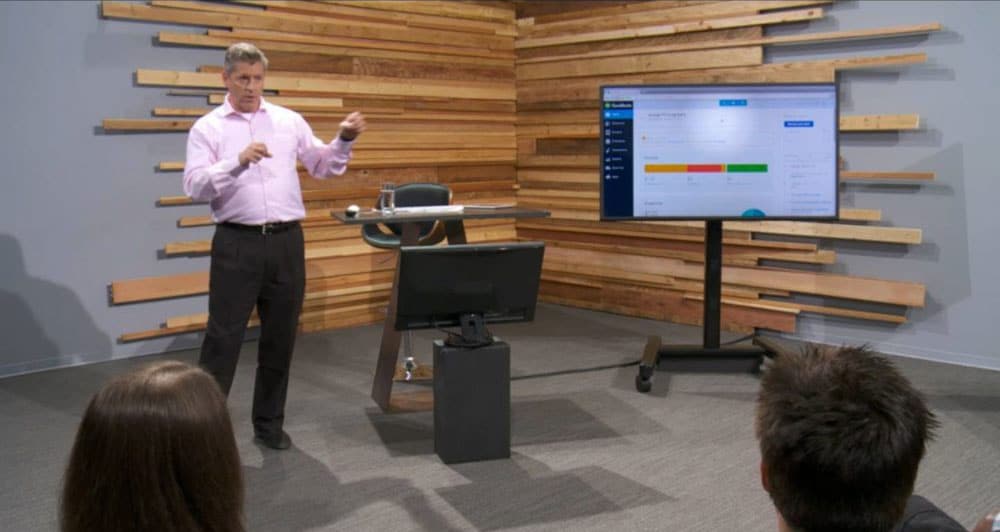
We would like to have seminars just down the block from everyone who sends in a request, but Ken Smith and Al Francisco (the course authors) teach all the classes in person. There just aren’t enough weeks in the year for us to teach an in-person course for everyone who requests a class. Because of this, almost everyone who takes our seminar has to travel. We hope you find it convenient to join the others flying in Thursday or Friday and back out Sunday evening!
We also offer in-house CPA exam review courses for staff members of firms and corporations. Let us know with an e-mail to pass (at sign) AIS-CPA.com with location, approximate dates, exam sections, and number of people if you'd like a proposal.
You could, and people have done that, but you probably don't want to. A lady in Nashville used several e-mail addresses to request a section there, and we taught it. But we had recently taught the same section there, so few other people were interested. She was one of two people in the class and both of them found it difficult to ask questions and stay alert for the entire class. People get much more out of the class when it is the normal 10 or 15 people and they can learn from each other. They can also share the jobs of asking questions and interacting with the instructor.
We offer a 15% discount for people who have taken a section of the seminar to
repeat that section provided they register at least a week in advance to repeat.
There is no other discount. The price is the same whether you attend part or all
of a section because your seat is not available to other students during the
time you are there. We do make paper and electronic (for download to your
computer) self study books available for people who are unable to attend our
in-person seminar. For details, see the self study books.
The certificate is valid. It belongs to the host of our website at Valueweb.com Since it is in their name, not ours, web browsers can't match it with our SSL web site. You can confirm its validity with valueweb.com.
You offer a 15% discount for people who have previously taken a section of
your seminar to repeat that section, but only if they enroll at least a week in
advance to repeat. Why can't I just show up at the seminar and still get the
discount?
The purpose of the discount is to encourage people to enroll in advance so
the office can prepare their workbook and ship it to them. The instructor at the
course should be spending time answering your study questions and helping you
learn the material, not enrolling other people in the class and preparing
workbooks for them. The instructors at the seminar do not have access to the
information necessary to grant a repeat discount. That information on prior
courses is available only in the office.
The quality of the course is the reason. We estimate future seminar
enrollments in various cities based on past enrollments, then we look for a
meeting room that will hold that many people comfortably. The most important
criteria is that the meeting room be quiet, so that everyone in the room can see
the screen and can hear the instructor clearly. We also consider the ease with
which people can drive and fly to that location. Very few hotels have a larger,
quiet, comfortable, meeting room available at the last minute. Once we find
enrollments are larger than we had anticipated, it isn't fair to ask all the
people who have already made plans to attend the meeting at that hotel to change
to another hotel for the convenience of a few people who decide to sign up at
the last minute.
AIS was formed in the early 1970's to meet a need at Boise Cascade Corporation. Their accountants and
internal auditors needed a course to help them pass the CPA exam and none was
available. Traditional courses wouldn't work because many of the people were
internal auditors who spent most of their time away from corporate headquarters.
Who started AIS and how did it get out of Idaho?
Ken Smith and Al Francisco had recently completed their Ph.D. programs and
were new accounting faculty members at Idaho State
University. They developed a one weekend review course and taught it at
Boise Cascade's corporate headquarters. Many of the people in the course, who
had taken the exam several times, suddenly passed.
CPA firm staff members
heard about the course and traveled to Idaho to take the course. Ken and Al
started traveling to the cities they were flying from, and teaching the course
in several locations. They still do.
Both Ken and Al grew up in Montana. Ken passed all four parts of the CPA
exam in May, 1968 when he was a college senior. Ken currently holds Idaho CPA
certificate #CP-712. He received his B.S. in accounting from the University of
Montana in 1968. He went on to complete his Ph.D. in accounting at the
University of Texas (Austin) in 1971.
Al passed all four parts of the CPA
exam in May, 1967 when he was a college junior. No experience or education
beyond a high school diploma was required in Montana at that time. He had his
CPA certificate (Montana CPA #491) at age 21, before he started his senior year.
Al received his B.S. in accounting from Montana State University in 1968. He
went on to earn an M.S. in accounting at the University of Denver in 1969 and a
Ph.D. in accounting from Michigan State University in 1972.
Ken Smith is dean of the College of Business
and director of accounting programs at Idaho State University. He also teaches
classes when he isn't teaching seminars or writing books. He received the
University's "Teacher of the Year" award for the 1996-1997 academic year.
Al Francisco, after many years at the University, is now spending full
time writing seminar workbooks, self study books, and this web page for
Accounting Institute Seminars®. If you take an AIS seminar, it will be taught by
either Ken or Al.
Recently, Idaho State University was first in the
nation (out of 529 schools with 10 or more candidates taking the exam) on the
CPA exam, with 54.5% of ISU students taking the exam for the first time passing
all four parts. ISU's successful curriculum is based on the AIS Intensive
Seminars.
Call AIS Toll Free at (800) 635-9442
A real person in the Mountain Time zone answers this number weekdays between 9 and 5.
AIS...We provide the formula....
Accounting Institute Seminars® (AIS) provides intensive review
courses for people taking the United States CPA examination. These seminars are
taught in person by one of the two authors of the course and are offered in a
number of cities in the U.S. each year.
For information on the seminars,
return to the CPA Exam Home Page at
www.AIS-CPA.com
We also offer self study CPA exam books written by
the same authors. Most are available on-line, for download to your computer. The
electronic version is less expensive than paper books. You can magnify pages on
your screen, fill the screen (view - full screen), search for terms, and print
pages. Best of all, you can start studying it now instead of waiting days for it
to arrive!
Here is the list of our currently available E-BOOKS CPA REVIEW.
For more
information on e-books or for paper copies, refer to CPA REVIEW SELF STUDY BOOKS.
Comments or questions to Yvette at yvetteh (at sign) AIS-CPA.com
Return to Top of This Page
Copyright© 1995-2008 Accounting Institute Seminars®, Inc. All Rights
Reserved. |